A quality vehicle wrap installed in the Edmonton area costs between $3,000 and $6,000 for a full wrap on a standard service van or pickup. Done correctly and maintained properly, that wrap should look sharp for five to seven years. Done correctly but maintained poorly, you’re looking at three years before edge lifting, fading, and adhesive failure make it look like a problem rather than an asset.
The majority of premature wrap failures have the same root causes: the wrong cleaning products, too-aggressive washing technique, or specific Alberta winter behaviours that put unnecessary stress on the vinyl. None of these failures are inevitable. This guide covers exactly what car wrap maintenance requires, with specific attention to the conditions that make Alberta harder on wraps than most markets: road salt, extreme cold, and high summer UV exposure at altitude.
Why Car Wrap Care Is Different from Regular Paint Care
Automotive paint is a hard, chemically cured surface. Vinyl wrap is a flexible polymer film with an adhesive backing. They respond differently to chemicals, different temperatures, and different mechanical stresses, and the cleaning products and habits that are fine for paint can actively damage vinyl.
The adhesive that bonds the vinyl to the vehicle paint is the most vulnerable component. Ammonia-based cleaners break down vinyl adhesive over time, causing the film to lift at edges and seams. Petroleum-based solvents can soften the vinyl itself. High-pressure water directed at seams and edges acts like a wedge, gradually lifting the vinyl away from the panel surface starting at the most vulnerable points. Abrasive scrubbing damages the protective laminate that sits on top of the printed vinyl, accelerating UV degradation once the laminate is compromised.
Understanding these specific vulnerabilities makes the care regime straightforward: use the right products, use the right technique, and pay specific attention to the points where vinyl is most at risk: seams, edges, and any area where the vinyl wraps around a panel edge or through a contour.
The Right Way to Wash a Wrapped Vehicle
Hand washing is the correct method for wrapped vehicles in all circumstances. It gives you control over water pressure, allows you to feel what you’re working with, and avoids the mechanical contact that automated car wash systems impose on the vinyl surface.
Hand Washing: The Best Method for Wrapped Vehicles
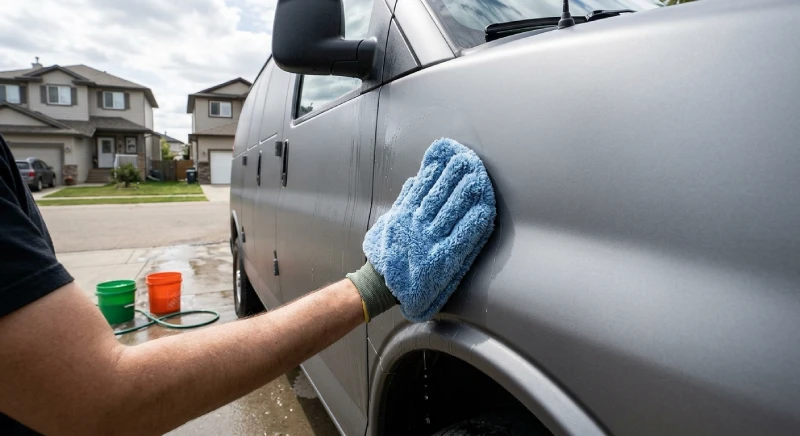
The two-bucket hand wash method is the standard: one bucket with pH-neutral car wash soap and warm water, one bucket with clean rinse water. A soft microfiber wash mitt picks up soap from the first bucket, washes a panel, and gets rinsed in the second bucket before going back to the soap bucket. This prevents abrasive contamination from the dirty rinse water being carried back to the vehicle surface.
Start with a gentle pre-rinse using a garden hose at normal tap pressure. The goal is to remove loose dirt, dust, and grit before the mitt touches the surface: grit dragged across the vinyl surface scratches the laminate. Work top to bottom: roof, hood and trunk, sides, then lower panels where road contamination concentrates. Rinse thoroughly after washing each panel so soap doesn’t dry on the surface. Air dry where possible, or use a clean, soft microfiber drying towel in a blotting rather than wiping motion.
Water temperature should be lukewarm to cool, not hot. Hot water softens vinyl adhesive, and consistent exposure to hot water during washing will gradually degrade adhesion at edges over time. This is especially relevant in commercial vehicle wash facilities where water is heated; lukewarm water washes just as effectively without the adhesive risk.
Touchless Automatic Car Washes: What’s Safe and What Isn’t
Touchless car washes are an acceptable option for wrapped vehicles when hand washing isn’t practical. The key is to choose a facility with moderate pressure settings and to stay away from the direct jets at seams and edges. After a touchless car wash, inspect the wrap edges (particularly the lower door edges, the hood edge, and any body panel seams) for any signs of lifting and press them back if you catch any at the very early stage.
Car washes with brushes, cloth rollers, or any contact components are not appropriate for wrapped vehicles. The mechanical action catches wrap edges and seams, and a single pass through a brush car wash can cause edge lifting across a significant section of a wrap. This damage is not always covered by the wrap warranty if the installer can demonstrate that a brush car wash was used. Hand wash or touchless only.
Car Wrap Do’s and Don’ts: The Essential List
A straightforward reference for day-to-day wrap maintenance:
Do’s:
- Wash with a pH-neutral automotive car wash soap.
- Use a soft microfiber wash mitt and the two-bucket method.
- Rinse grit off before touching the surface with anything.
- Spot-clean immediately when fuel, bird droppings, tree sap, or insect splatter contacts the wrap. These are time-sensitive and cause permanent damage if left.
- Dry with a clean microfiber towel using a blotting motion.
- Park in a garage or covered parking when possible.
- Apply a vinyl-specific spray sealant twice a year for UV protection.
Don’ts:
- Don’t use ammonia-based cleaners (Windex, most household glass cleaners).
- Don’t use a pressure washer at close range or direct the jet at seams and edges.
- Don’t use rough sponges, brushes, or abrasive pads on the vinyl surface.
- Don’t use wax on matte or satin wraps (it fills the texture and creates an uneven finish that cannot be easily corrected).
- Don’t let gasoline drip onto the vinyl surface during fueling. Wipe it immediately; don’t let it sit. Don’t park in direct sun for extended periods when there is shade available.
Vinyl Wrap Winter Care: Alberta-Specific Advice
Alberta winters are the most demanding part of the vinyl wrap maintenance year, and the specific conditions require habits that don’t apply in milder climates.
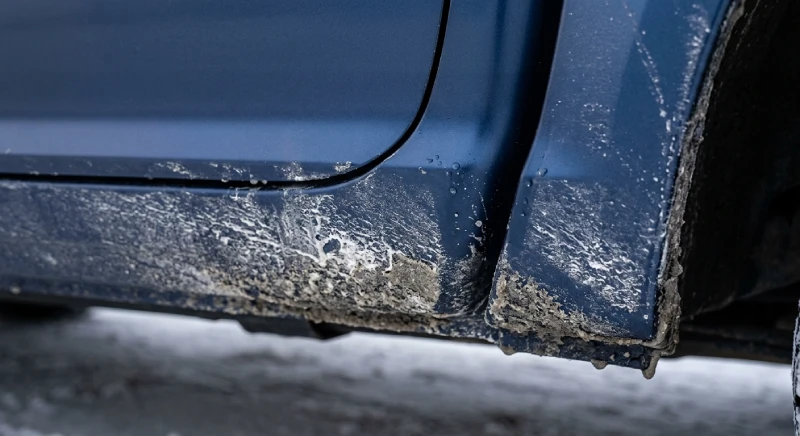
Road salt is the primary winter threat to wrap longevity. Both sodium chloride and magnesium chloride, the two salt compounds used on Alberta roads, are chemically aggressive toward vinyl adhesive when they accumulate and sit at wrap edges. The pattern is: salt water splashes up from the road, deposits on the lower panels, and, as it evaporates, concentrates at the wrap edges, exactly where adhesive bond strength matters most. Washing the vehicle every 1 to 2 weeks during the salt season, specifically directing the rinse to lower panels and wheel arches, prevents this accumulation from becoming a long-term adhesive problem.
Ice scraping is one of the most common sources of wrap damage in Alberta. Hard plastic ice scrapers and metal ice scrapers cut and abrade vinyl when used directly on a wrapped surface. The correct tool is a soft foam snow brush for clearing snow; it clears the surface without contacting the vinyl aggressively. For ice on a wrapped vehicle, the correct approach is to allow the defroster and cabin heat to do the work. If you must accelerate the process, a vinyl-safe de-icer spray applied to the ice (not scraped) is the appropriate method.
Cold temperatures make vinyl more brittle and less elastic. At -25°C or below, vinyl that is flexed aggressively can crack rather than flex. This brittleness is temporary and reverses as the vehicle warms, but it means that car doors on wrapped vehicles should be closed with normal force rather than slammed in extreme cold. The risk of cracking from normal use is low, but it is worth knowing that vinyl behaviour changes significantly at the lower end of Alberta’s temperature range.
Indoor parking provides the single most meaningful protection for a wrapped vehicle during Alberta winters. A vehicle stored in a heated garage overnight is spared the freeze-thaw cycling that stresses adhesive bonds over the course of a winter, is protected from the salt accumulation that happens to parked vehicles in areas with road spray, and maintains a more stable temperature range that extends the vinyl’s service life. For businesses with commercial fleets, the investment in covered fleet parking is directly reflected in longer wrap replacement intervals.
Fuel Spills, Bird Droppings and Tree Sap: Spot Treatment
Several common contaminants require immediate attention because they cause permanent damage to vinyl wrap if left for more than a few hours in warm weather.
Bird droppings are the most time-sensitive. Bird waste is highly acidic and etches the laminate surface of vinyl wrap; in summer heat, noticeable etching can occur within 24 to 48 hours. When you find bird droppings on the wrap, do not wipe them. Dry wiping spreads the acid and abrades the surface. Soak the area with warm water first, allow the droppings to soften, then blot with a damp microfiber cloth. Rinse thoroughly. If the wrap laminate is already showing a frosted or etched appearance where the droppings were, the surface damage is likely permanent, though the extent depends on how long it sat and the temperature.
Tree sap bonds strongly to vinyl and hardens as it cures. Fresh sap can be removed with a diluted isopropyl alcohol solution (70% IPA diluted 50/50 with water) applied on a soft cloth, worked from the outside of the deposit inward, then rinsed clean. Cured sap requires more attention; a commercial tar and sap remover formulated for automotive vinyl is the appropriate product. Avoid using undiluted solvents, which can soften the vinyl or attack the adhesive.
Gasoline should be wiped immediately if it contacts the vinyl surface during fueling. Gasoline softens vinyl adhesive and degrades the film if allowed to soak in. A clean cloth, prompt wiping, and a rinse with water are all that’s needed if the contact time is minimal. A fuel spill that sits on a vinyl surface for more than a few minutes may cause adhesive softening under the affected area, which can show up as bubbling or lifting in the weeks that follow.
When to Contact Your Wrap Installer: Warning Signs
Knowing when to address a wrap issue professionally is part of responsible wrap ownership, rather than monitoring it. Caught early, most issues are quick and inexpensive to fix. Ignored, they become panel replacements.
Edge lifting is the most common early-stage issue. A small section of vinyl that has lifted 5 or 10 millimetres from the panel edge, or a seam that is beginning to separate, can be resealed by a wrap installer using a heat gun and edge sealant in a few minutes. The same lifting, left through a winter of freeze-thaw cycling, becomes a 30-centimetre lifted section that may require panel replacement. Inspect the lower panel edges, the hood, and any complex curves after each winter season. These are the highest-stress areas where lifting typically starts.
Bubbling under the vinyl surface usually indicates moisture intrusion, which typically follows edge lifting. If you see bubbles that weren’t there when the wrap was new, address the source of entry (a lifted edge or seam) before attempting to address the bubble itself. A wrap installer can assess whether bubbling indicates adhesive failure requiring section replacement or a simpler repair.
Concentrated fading in specific areas indicates UV laminate failure. Once the laminate that protects the ink layer begins to break down, UV fading accelerates rapidly. If you see a clearly faded area on the wrap before the five-year mark, consult your installer; it may indicate a material quality issue or an application problem that can be addressed under warranty.
FAQ
- Can I take a wrapped vehicle through a car wash? – Touchless automatic car washes are acceptable for vinyl-wrapped vehicles. Brush-equipped car washes are not: the mechanical action catches wrap edges and seams, causing lifting and potential tearing. The safest method is always hand washing with a pH-neutral soap and soft microfiber mitt. If using a touchless car wash, choose one with moderate pressure settings and inspect the wrap edges afterwards, particularly on older wraps where edges may have started to lift.
- How do I remove ice and snow from a wrapped vehicle? – Use a soft foam snow brush for clearing snow; it removes snow without aggressively contacting the vinyl surface. For ice, allow the vehicle to warm with the defroster and cabin heat running until the ice releases naturally. A vinyl-safe de-icer spray is an acceptable option for accelerating ice release. Never use a hard plastic or metal ice scraper directly on a wrapped surface, since scrapers cut and abrade vinyl, and in extreme cold when vinyl is most brittle, this risk is highest.
- What soap should I use to wash a wrapped vehicle? – Use a mild, pH-neutral automotive car wash soap with no ammonia, no silicone additives, and no wax agents. Specifically avoid household glass cleaners and any cleaning product containing ammonia. These are the most common cause of adhesive degradation and edge lifting on vehicle wraps. Products labeled as safe for paint protection film (PPF) are generally safe for vinyl wraps and are widely available at automotive retailers.
- How often should I wash a wrapped vehicle in Alberta? – In summer, washing every two to four weeks is appropriate for most service vehicles. In winter, wash every one to two weeks to prevent road salt accumulation at wrap edges, which is the primary winter maintenance priority for Alberta vehicles. Spot clean immediately for fuel spills, bird droppings, and tree sap. These are time-sensitive contaminants that can cause permanent damage within hours in warm weather, so they should not wait for the next scheduled wash.
- Does waxing a vehicle wrap damage it? – Wax should not be applied to matte or satin vinyl wraps, since it fills the texture and creates a blotchy, uneven sheen that cannot be easily corrected. Gloss vinyl wraps can tolerate non-abrasive spray waxes, but a Teflon-based or polymer-based spray sealant specifically designed for vinyl is a better choice. It provides UV protection and water beading without the residue problems that paste wax causes, and is appropriate for both gloss and matte finishes when specified as vinyl-safe.