Highway 16A cuts through Spruce Grove as one of Alberta’s busiest commercial corridors, connecting thousands of drivers daily between Edmonton and points west. For businesses along this route, the stakes for visibility are high. Your storefront competes against dozens of other businesses vying for driver attention in a matter of seconds. The difference between a business that thrives and one that struggles often comes down to one factor: professional signage that stops traffic and communicates your value in an instant.
Why Highway 16A Is Prime Real Estate for Spruce Grove Businesses
Highway 16A is more than just a road; it’s a marketplace. The corridor handles approximately 30,000 daily vehicle movements in the Spruce Grove area, making it one of the highest-traffic routes in the region. This volume creates an unparalleled opportunity for visibility, but only if your business can cut through the noise.
The challenge is real. Unlike a shopping mall or downtown street where pedestrians move slowly and have time to notice signage, Highway 16A drivers are moving at speed. They have seconds, not minutes, to identify your business, process your message, and make a decision about stopping. According to industry research, 83% of consumers say that signage reflects a business’s product or service quality. When your sign is poorly designed, dimly lit, or strategically positioned, it signals neglect, not professionalism.
The competitive density along Highway 16A compounds the problem. Between retail stores, restaurants, service businesses, and gas stations, businesses are fighting for eyeballs. Strategic signage becomes your primary tool for winning that competition. A well-designed monument sign or channel letter display doesn’t just attract customers; it establishes credibility before someone even walks through your door.
Types of Outdoor Signage That Work Best on Highway 16A
Not all signage is created equal. Different sign types serve different purposes, and the best choice depends on your business type, budget, and visibility goals. For Highway 16A specifically, several formats consistently outperform others.
Monument Signs and Pylon Signs
Monument signs are ground-level structures, typically 6-12 feet tall, that serve as landmark identifiers for businesses. Pylon signs stand taller (often 15-35 feet) and are visible from greater distances. Both work exceptionally well on Highway 16A because they’re positioned to catch eye-level sightlines at highway speeds. Monument signs feel more permanent and professional; pylon signs maximize visibility from further away.
Channel Letters and Illuminated Displays
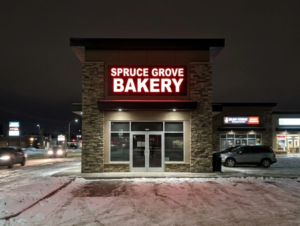
Channel letters are individually fabricated 3D letters, often LED-lit from within, mounted directly on your building or storefront. For Highway 16A businesses, illuminated channel letters serve a critical purpose: they work 24/7. As evening falls and streetlights kick in, illuminated signage ensures your business remains visible. The contrast created by LED lighting makes your business stand out even in low-light conditions.
Vehicle Wraps and Mobile Signage
A single vehicle wrap on Highway 16A generates thousands of impressions daily. Unlike static signage, vehicle wraps move through the marketplace, extending your reach beyond your physical location. For service-based businesses (HVAC contractors, plumbers, landscapers), vehicle wraps transform your fleet into a mobile advertising platform.
A-Frame and Directional Signage
A-frame signs are portable and flexible; they’re ideal for announcing promotions or directing traffic. Directional signage helps customers navigate to your entrance from Highway 16A, particularly important if your business sits back from the main road. Both serve practical purposes while reinforcing your brand presence.
The Highway 16A Visibility Challenge: Why Design Matters
Designing signage for highway visibility is fundamentally different from designing signage for a storefront or interior space. The science of readability at speed is straightforward but often ignored. Text that’s easy to read from 20 feet becomes illegible at 60 feet, especially from a moving vehicle.
Font choice is critical. Sans-serif fonts (clean, simple typefaces like Arial or Helvetica) are vastly more legible than serif fonts (fonts with small decorative lines) at distance and speed. The stroke width (the thickness of the letters) matters as much as the typeface itself. Thin, delicate letters disappear at highway speeds; bold, substantial letterforms cut through.
Color contrast determines readability more than size alone. Dark text on a light background or light text on a dark background creates the highest contrast. Avoid color combinations like red on orange or blue on purple; they blur together at a distance. The most legible highway signs in North America use high-contrast palettes: white on black, black on white, or yellow on black.
Lighting transforms your signage from daylight hours into evening visibility assets. External lighting, like floods or spotlights mounted above or to the side of signage, illuminates the sign itself. Internal lighting (like LED channel letters) makes the light source part of your branding. For Highway 16A, which remains busy into evening hours, illumination often determines whether a business is visible or invisible after dark.
Spruce Grove Sign Regulations and Local Permits
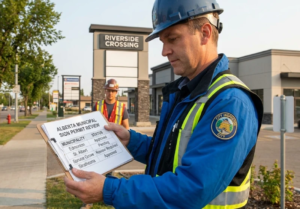
Before you invest in signage, you need to understand what’s legally permissible. The City of Spruce Grove regulates signage through Part 10 of its Land Use Bylaw. This framework covers sign types, sizes, materials, placement, and which signs require formal permits.
Not all signs require permits. Temporary signage, small directional signs, and certain window graphics may fall outside permitting requirements. However, most exterior business signage, particularly monument signs, pylon signs, and illuminated displays, does require approval. The permitting process typically takes 1-2 weeks and involves submitting design drawings, site plans, and documentation of compliance with setback and height requirements.
Highway setback rules are particularly important for Highway 16A businesses. The City establishes minimum distances your signage must maintain from the highway itself. These setbacks prevent visual clutter and ensure driver safety by preventing distraction near traffic zones. Violating setback requirements can result in removal orders and fines.
Size limitations vary by zone and sign type. Monument signs on Highway 16A typically max out at 15-20 square feet of sign face area, though regulations can differ by specific location. Pylon signs have different size allowances. Understanding these limits before design begins prevents costly revisions.
How to Choose the Right Signage for Your Spruce Grove Business
Selecting signage is an investment decision, and like all investments, it requires a clear strategy. Start with honesty about your business type and visibility challenge. A dental practice, accounting firm, or medical office has different visibility needs than a restaurant, retail store, or automotive service center.
Define what visibility means for your business. Are you seeking brand awareness among passersby, or are you directing customers who already know you exist? Are you competing on visibility alone, or is your signage part of a larger marketing strategy? These questions shape everything from sign type to design approach.
Budget constraints are real, but the cheapest option often becomes the most expensive. A poorly designed, cheaply constructed sign fades, breaks, and creates negative perceptions about your business. Professional signage carries higher upfront costs but pays dividends over 5-10 years of use.
Alberta’s climate presents unique demands. Spruce Grove experiences temperature swings from -40°C winters to +35°C summers. Metal substrates expand and contract. Vinyl fades under intense summer UV. LED fixtures can fail if not properly sealed against moisture. Professional sign manufacturers understand these demands and build signage accordingly.
Best Practices for Highway 16A Sign Placement and Design
Placement is as important as design. Your sign should position itself directly in the sightline of approaching traffic. If your business sits 100 feet back from Highway 16A, setback signage alone won’t cut it; you may need monument signage closer to the road or a pylon sign that’s visible from a distance.
Angle and height matter. Signage positioned at eye level (5-7 feet) from a highway vantage point balances visibility with professionalism. Too low, and it becomes blocked by passing vehicles. Too high and it misses the natural sightline.
Message clarity is non-negotiable. On Highway 16A, you have 3-5 seconds to communicate. Your sign should convey three things: business name, business type, and a key differentiator. Avoid cluttered designs with excessive information.
Lighting strategy depends on evening traffic patterns. If your business operates primarily during daylight hours, external lighting may suffice. If you’re open evenings or operate 24/7, internal illumination (LED channel letters) becomes essential.
Brand consistency ties signage to your other marketing assets. Your signage should reflect your logo, color palette, and brand voice. A sign that looks unmistakably like yours builds recognition.
Timeline and Installation: What to Expect
Understanding the project timeline prevents frustration. The design phase typically takes 2-3 weeks from initial brief to finalized rendering. Permitting adds another 1-2 weeks. Manufacturing times vary by sign type: simple channel letters might take 2-3 weeks; complex custom monuments can take 4-6 weeks. Installation itself usually requires 1-2 days, depending on complexity.
Total project timeline from concept to operational signage typically spans 6-8 weeks. Businesses that underestimate this timeline often rush and make poor design decisions. The best approach is to begin signage planning 3 months before your ideal installation date.
Maintenance and Seasonal Considerations in Spruce Grove
New signage is exciting, but maintenance determines longevity. In Spruce Grove’s climate, winter brings unique challenges. Snow and ice buildup on signage can impact visibility and create safety hazards. Regular clearing and inspection during winter months protect your investment.
LED bulbs eventually burn out and require replacement. Professional manufacturers typically warrant LEDs for 3-5 years; planning replacement cycles prevents your sign from dimming over time. Annual inspections catch problems early (loose fasteners, weathered caulking, or faded materials) before they become visible liabilities.
FREQUENTLY ASKED QUESTIONS
How much does a new business sign cost on Highway 16A in Spruce Grove?
Cost varies dramatically by sign type, size, and materials. A simple channel letter sign might cost $3,000-$8,000. Monument signs typically range from $ 8,000 to $ 15,000. Illuminated pylon signs can exceed $25,000. While price matters, the real question is ROI. A $10,000 sign that generates $50,000 in additional annual revenue is an exceptional investment.
Do outdoor signs in Spruce Grove require permits?
Most exterior business signage in Spruce Grove requires a sign permit from the City. The permitting process involves submitting designs and site plans to ensure compliance with Part 10 of the Land Use Bylaw. Permits typically take 1-2 weeks to approve and cost a small fraction of the total project cost.
Can I install a sign myself, or do I need professional installation?
Professional installation is strongly recommended for all but the simplest signs. Monument signs require concrete foundations and specialized equipment. Channel letters require electrical expertise. Improper installation creates safety hazards and voids warranties. Professional installation costs 10-15% of the total project cost and ensures the job is done correctly.
How bright should illuminated signage be on Highway 16A?
Illumination should be bright enough to be visible from highway speeds but not so bright that it creates glare or safety hazards. LED channel letters typically use 100-200 watts of power. Professional designers balance visibility against light pollution and neighboring businesses.
What materials work best for Spruce Grove’s climate?
Aluminum substrates are the standard for durability in Alberta. Aluminum resists rust and handles temperature swings better than steel. LED bulbs are more durable than neon in cold climates. Quality caulking and sealing prevent water infiltration during freeze-thaw cycles.
How long does professional signage typically last?
Well-maintained, professionally fabricated signage lasts 7-10 years or longer. Lifespan depends on materials, exposure to elements, and maintenance. Regular cleaning and seasonal inspections extend lifespan beyond typical expectations.