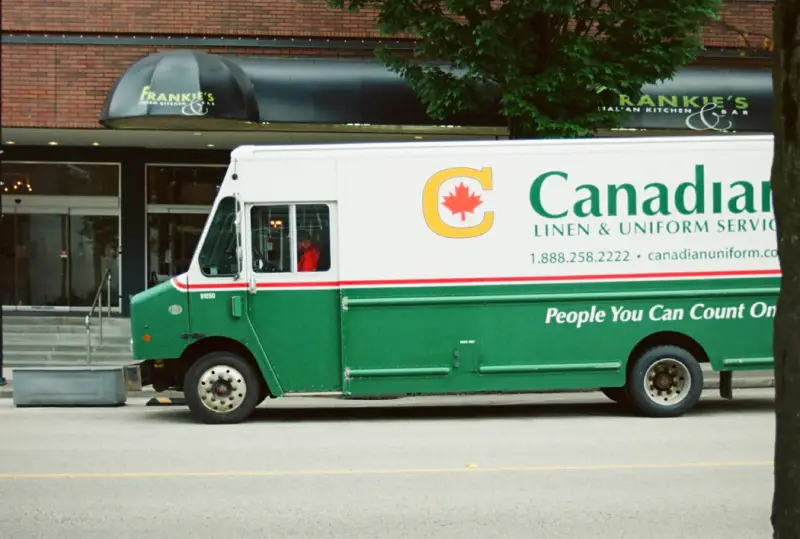
Think about the last time a contractor’s truck sat in your neighbour’s driveway for a few hours. You probably noticed it. If it had a name, a phone number, and a clear description of the service, there’s a decent chance you remembered it when you needed the same work done a few months later. Vehicle wraps in a residential community work because of that: they put your name in front of your exact audience over and over, at moments when they’re actually paying attention.
Spruce Grove is a growing community west of Edmonton with a lot of residential development in the newer subdivisions. Jesperdale, Springate, and the neighbourhoods along Century Road are full of newer homes, and newer homes mean ongoing demand for plumbing, electrical, HVAC, roofing, landscaping, and general contracting. A trades business working in Spruce Grove and Parkland County is already driving past its customer base every day. A wrap just makes sure the customer base knows who you are when they see you.
This guide is for trades and contractor businesses working in and around Spruce Grove. It covers wrap options, what to put on the vehicle, what to expect to spend, and what the process looks like from quote to keys.
Why Vehicle Advertising Works Especially Well for Trades in Spruce Grove
The big advantage of vehicle wraps for service businesses is geographic targeting that no digital platform can match. A Google ad can be shown to someone in Spruce Grove who searches for a plumber. A wrapped truck parked in a Spruce Grove driveway during a job is seen by the homeowner across the street, the neighbour two doors down walking the dog, the family driving past on their way somewhere, and anyone who happens to walk by. Those impressions are happening in the exact neighbourhoods where your customer base lives.
The Outdoor Advertising Association of America puts vehicle wrap impressions somewhere between 30,000 and 70,000 per day in a typical urban and suburban driving environment. Even at the low end of that range, over a five-year wrap life, that’s roughly 50 million impressions from a one-time investment. No other channel in the trades category comes close on cost per impression.
Spruce Grove’s geography helps too. Highway 16A runs through the city and carries traffic from the broader Parkland County market: St. Albert commuters, Stony Plain residents, rural route workers. A truck wrapped with your business name and service category is visible to that entire corridor whenever your vehicle is on the road or parked near it.
Full Wrap vs. Partial Wrap: Which Is Right for Your Truck?
This isn’t all-or-nothing. The right choice depends on your budget, the type of vehicle, and how much visual impact you actually need.
Full vehicle wraps
A full wrap covers the entire exterior of the vehicle (hood, roof, sides, rear, and bumpers) with a printed vinyl graphic. The result is a complete visual change. It no longer looks like a stock white cargo van or pickup; it looks like a branded business vehicle. Full wraps have the highest impact from any angle and any distance.
They’re worth it when you want your vehicle to stand out in a neighbourhood rather than just be identifiable. They also make sense if you’re building a fleet where consistency across multiple vehicles matters. The investment is higher, and the payoff scales with it.
Partial wraps
A partial wrap typically covers the rear of the vehicle and both sides from the cab back, leaving the hood and roof in the factory color. This is the most common format for single-vehicle service businesses in Spruce Grove because it gets you most of the impact of a full wrap at a fraction of the cost. A well-designed partial wrap with your logo, business name, phone number, and service category reads cleanly from any angle where another driver or pedestrian will see you.
Partials also give the designer more flexibility, since the graphics stay on the most visible surfaces and don’t have to work around the awkward curves of a hood or roof. For a plumbing or electrical van that spends most of its day parked at residential job sites, a partial wrap seen from both sides and the rear covers every angle that matters.
Vehicle lettering and decals
Lettering is the entry-level option: cut vinyl letters and logo decals applied to a plain vehicle. For a trades business just getting started, or for secondary vehicles in a fleet where budget is tight, lettering gives you a clean, professional look without the cost of a printed wrap. Business name, phone number, trade license number where applicable, and website are the standard elements.
Lettering doesn’t have the same visual impact as a printed wrap from a distance, but it clearly identifies a professional business vehicle and gives potential customers the contact info they need. It’s a starting point. A lot of businesses run lettered vehicles for their first year or two and reinvest in a full wrap once the revenue is there.
Contractor Vehicle Branding: What Information to Include
A wrap with the right information generates leads. A wrap with too much information doesn’t, because from ten feet away it just reads as noise.
The non-negotiables for a Spruce Grove trades vehicle: your business name (big, readable from a distance), your phone number (big enough to read from a following vehicle), and your primary trade or service category. If you do plumbing, the word “Plumbing” needs to read cleanly from twenty feet. That’s what turns your truck into a mobile referral. Someone sees it at a neighbour’s house, sees what you do and how to reach you, calls you next month when they need the same thing.
Secondary information that adds value without cluttering things up: your website, a brief service area line (“Serving Spruce Grove, Stony Plain & Parkland County”), and any relevant certification or license markers (Gas Fitter, Red Seal Electrician, Journeyman HVAC). License numbers required by Alberta trade regulations should appear where applicable.
What to leave off: a full list of every service you offer, long taglines, fine-print disclaimers, and social media handles set in font sizes no one can read from a moving vehicle. The wrap is not a brochure. Anything that isn’t essential for the viewer to identify you and contact you is competing with the things that are.
Truck Advertising in Spruce Grove: ROI That Other Media Can’t Match
Look at how vehicle wraps compare to the other options a Spruce Grove trades business typically considers. Radio on an Edmonton station reaches a wide area, most of which is nowhere near your service territory. Community newspaper ads run once, on publication day, and most readers don’t need your service that week. Digital display ads get about 1.7 seconds of attention on average before someone scrolls past.
A wrap that costs $3,500 installed and lasts five years works out to about $700 a year, or under $2 a day, for advertising that runs every time the vehicle is on the road. At 30,000 impressions per day in a busy suburban environment like Spruce Grove, the cost per impression is a fraction of a cent.
The practical proof for trades businesses is the referral effect, and this one’s harder to put a number on. Wrapped vehicles generate word of mouth that never touches a digital analytics dashboard: the neighbour who calls because they saw your truck across the street, the property manager who noticed your work in their building’s parking lot, the homeowner who photographed your truck at a job site and texted the number to a friend. Those leads happened because the truck was there, branded, and memorable.
Vehicle Graphics for Spruce Grove Trades: Material and Durability
Not all wrap materials perform the same, and the difference shows up faster in Alberta than it would in Vancouver or Victoria.
Cast vinyl is the standard for full vehicle wraps. Cast films (3M 1080 series, Avery Dennison Supreme Wrapping Film, Oracal 970 RA are the ones most people know) are made by spreading liquid vinyl into a flat sheet and letting it cure, rather than extruding it through rollers. Casting produces a more flexible, dimensionally stable material that conforms to compound curves and recessed panels without lifting or creasing. Cast vinyl is rated for five to seven years of exterior automotive use.
Calendered vinyl is the alternative. It’s cheaper, pressed through rollers, and rated for two to three years. It’s fine for flat surfaces and short-term applications, but on a vehicle that sees full weather exposure, it will lift at edges, wrinkle around curves, and look worn within a couple of years. Any reputable installer in Spruce Grove uses cast vinyl for full wraps. Be cautious if a quote is significantly under market, because calendaring is a common cost-cutting substitution.
Alberta’s climate adds specific issues. Freeze-thaw cycles stress the adhesive bond at wrap edges, especially on vehicles parked outdoors overnight in winter. Road salt accelerates edge lifting if the vinyl edges weren’t properly finished during installation. A quality installer seals edges carefully and works at the right adhesive activation temperatures. In Alberta, that means scheduling full wrap installations at temperatures above 10°C, or using a heated shop.
Laminate finish affects both look and durability. Gloss is the most common and produces the strongest color saturation and a polished look. Matte and satin laminates have a more current feel and also hide swirl marks and road grime better between cleanings, which some trades businesses appreciate. Textured laminates like brushed metal and carbon fiber exist too, but they’re specialty finishes used more for full vehicle transformations than for standard service branding.
The Vehicle Wrap Process: From Quote to Installation
Start to finish, the process for a Spruce Grove trades vehicle usually runs one to two weeks, though design-heavy projects can go longer.
It starts with a consultation and quote. The installer measures or pulls template dimensions for your specific make, model, and year so the designer is working with accurate panel dimensions. You provide your logo files (vector format preferred, so an AI or EPS file from your graphic designer, or a high-resolution PDF), your color specs, and the info you want on the truck. A design proof usually comes back within a few business days, and you approve it or ask for changes.
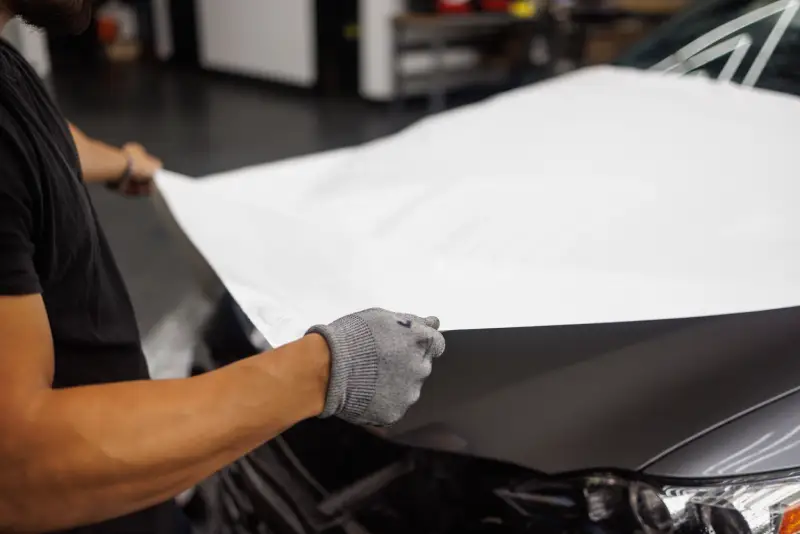
Production follows approval. The wrap vinyl is printed and laminated, then off-gassed for 24 hours before installation. The vehicle has to be thoroughly cleaned and decontaminated first because residue, wax, or surface contamination affects adhesion. Installation on a standard cargo van or full-size pickup takes one to two full days for a complete wrap. Partial wraps are usually done in a day.
You’ll get care instructions when you pick it up. Hand washes only. No automated car washes with brushes, and no high-pressure jets aimed at seams or edges. In winter, use a soft foam snow brush rather than an ice scraper on vinyl surfaces. Rinse road salt off regularly to keep it from breaking down the adhesive at exposed edges. Following those consistently is what turns a five-year wrap into a seven-year one.
FAQ
Q1: How much does a vehicle wrap cost in Spruce Grove?
- Vehicle wrap pricing in the Spruce Grove area varies based on vehicle size and coverage. A basic lettering package for a service van typically starts around $500 to $1,000. A partial wrap runs $1,500 to $3,000, and a full wrap on a standard cargo van or pickup truck generally ranges from $3,000 to $6,000, including design, print, and professional installation. Custom vehicles and larger commercial trucks are priced by project scope.
Q2: How long does a vehicle wrap last?
- A professionally installed wrap using cast vinyl film typically lasts five to seven years when maintained properly. Calendered vinyl, which is cheaper but thicker and less flexible, is closer to two or three years. In Alberta’s climate, protecting the wrap from prolonged UV exposure and road salt makes a real difference. Vehicles that are garaged overnight and hand-washed consistently outlast those left outdoors and run through automated washes.
Q3: Will a vehicle wrap damage my truck’s paint?
- A professionally installed vinyl wrap won’t damage factory paint that’s in good condition. Wraps applied over repainted or damaged areas carry more risk, since the adhesive can pull at compromised paint on removal. When a trained installer removes a wrap using heat and the correct technique, factory paint underneath is typically unaffected. Wraps are often used to protect original paint from road chips and UV exposure over the life of the wrap.
Q4: Can I get a vehicle wrap for just one truck, or do I need a fleet?
- Single-vehicle wraps are standard. Most trades businesses in Spruce Grove start with one truck or van, and there’s no minimum order. If you run a fleet of two or more vehicles, most sign companies offer volume pricing and design consistency across the fleet, which reinforces recognition throughout your service area. A consistent fleet presence in Spruce Grove neighbourhoods is a lot more memorable than a single wrapped vehicle.
Q5: How do I maintain a wrapped vehicle in Alberta’s climate?
- Hand washing is the right method for wrapped vehicles. Avoid automated car washes with brushes, which can lift wrap edges, and don’t aim high-pressure jets at seams. In winter, use a soft snow brush rather than an ice scraper on vinyl surfaces. Rinse road salt off regularly to prevent adhesive breakdown at exposed edges. Following these practices can add two or more years to the wrap’s life compared to vehicles that get neglected.